Admin

Is Your Annual Report a Bore? Transforming Data into Dynamic Corporate Film

For many stakeholders—employees, investors, and the public—the annual report remains a necessary evil: hundreds of pages of dense financial data, regulatory text, and generic corporate prose. It’s a crucial document, but in its traditional form, it is, frankly, a bore. In today’s digital economy, a static PDF simply fails to convey the impact, passion, and vision that actually drives a company’s performance. The solution is to move beyond the bindery and into the lens: transforming data and narratives into a dynamic Corporate Film. The Problem: When Data Loses Its Meaning The primary issue with the traditional annual report is that it prioritizes compliance over connection. It presents data without context and achievements without the human story behind them. Information Overload: Few people read a 100-page report cover-to-cover. They skim the executive summary and glance at the financials, missing the subtle narrative thread. Lack of Emotional Resonance: The document offers zero emotional engagement. It is incapable of showing the dedication of the R&D team, the impact on a customer, or the passion of the leadership team. Poor Shareability: A massive PDF is cumbersome and not optimized for social media, internal communications platforms, or investor presentations. It dies in the inbox. A Corporate Film solves these problems by leveraging the brain’s preference for visual and auditory input, turning dry figures into compelling narratives. The Transformation: From Spreadsheet to Storyboard A dynamic annual report film functions as the ultimate executive summary, proving the data through powerful visual storytelling. 1. Humanizing the Numbers Instead of listing revenue growth, show the new factory floor or the increased output that fueled that growth. Instead of detailing CSR spend, feature the community members your initiative impacted. By interviewing key leaders and employees, the film translates corporate strategy into authentic, relatable human achievement. 2. Visualizing Complex Data Data visualization in a film format is far more impactful than a chart on a page. Motion graphics and animation can illustrate complex trends, market share shifts, and future projections with clarity and sophistication. Animation can transform a dry bar chart into a dynamic, memorable visual experience that immediately clarifies a strategy. 3. Defining the Narrative Arc Every successful company year follows a narrative arc: Challenge, Action, Result. The film structures the report around this, ensuring a clear, engaging story: The Challenge: Identifying the market headwinds the company faced. The Action: Highlighting the strategic moves, technology adoption, or team efforts taken. The Result: Demonstrating the quantifiable success and future outlook. This structure captures the audience and compels them to understand why the numbers matter. The Strategic Value of Video A video annual report has enormous strategic advantages that a print document can never match: Investor Relations: It provides a compelling, digestible asset for roadshows and pitches, instantly communicating the company’s vitality and transparency. Recruitment & Culture: It becomes a powerful tool for recruiting top talent by showcasing a company’s positive culture, mission, and success. Digital Reach: The film can be cut into smaller segments (micro-content) for distribution across LinkedIn, newsletters, and internal screens, maximizing reach and reinforcing key messages throughout the year. The annual report is your company’s most important story of the year. Don’t let it be confined to a dull document; let it be the dynamic film that drives excitement and confidence in your vision. RedAsh Films: Engineering Your Annual Narrative At RedAsh Films, we specialize in this critical transformation: turning complex, dry enterprise data into high-impact Corporate Films that achieve measurable communication goals. We operate as a full-service Ad Agency cum Film Production House, meaning our process starts with strategy, not just filming. We work with your finance and executive teams to distill the core message and use professional visual storytelling—from sophisticated live-action to compelling motion graphics—to ensure your annual narrative is not just compliant, but utterly unforgettable.

Is Your Annual Report a Bore? Transforming Data into Dynamic Corporate Film Read More »
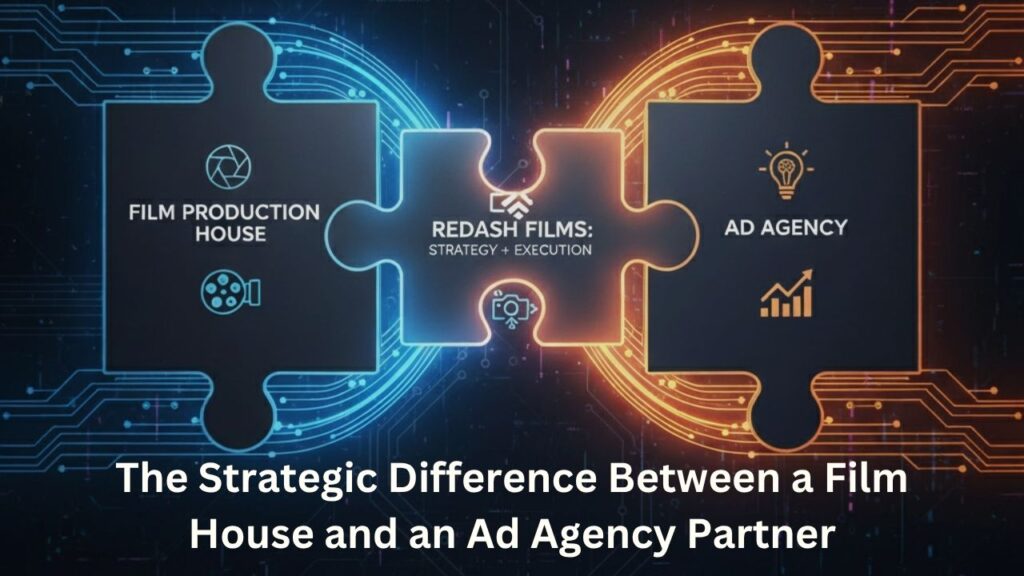
The Strategic Difference Between a Film House and an Ad Agency Partner

When a business decides to invest in video—whether it’s a high-impact ad campaign, a corporate film, or a viral micro-drama series—a critical decision arises: should they hire a pure Film Production House or engage a full-service Ad Agency that also has production capabilities? While both deliver video, their roles, responsibilities, and strategic value are fundamentally different. Understanding this distinction is key to achieving a measurable return on your video marketing investment. The Pure Film Production House: The Execution Expert A traditional Film Production House operates primarily as a vendor and an execution partner. Their expertise is deep, focused, and technical: Core Strength: Execution and Craft. Their primary goal is to take an already approved script, storyboard, and creative brief and bring it to life with the highest possible production quality (cinematography, lighting, direction, and post-production). The Problem Solver (How): They focus on the how—how to light a scene, how to capture a complicated shot, and how to stay on schedule and budget during the shoot. Role in Strategy: Minimal. They are typically not involved in defining the target audience, setting the marketing KPIs (Key Performance Indicators), or choosing the distribution channels. They execute the creative vision handed to them. Success Metric: Delivering a video that matches the approved brief and looks aesthetically excellent. In short, a Film House is like a master builder: they construct the house flawlessly, but they didn’t design the blueprints or choose the neighborhood. The Ad Agency Partner: The Strategic Consultant A specialized Ad Agency that incorporates video production capabilities acts as a true strategic partner. Their role extends far beyond the final cut: Core Strength: Strategy, Market Insight, and Integrated Performance. Their process begins before the script is even written, ensuring the video serves a larger business objective. The Problem Solver (Why & Where): They focus on the why—Why are we making this video? Which audience segment needs to see it? Where will it generate the best ROI (Return on Investment)? Role in Strategy: Central. They are responsible for market research, developing the core marketing message, planning the content format (e.g., short-form vs. long-form, live-action vs. animation), and most importantly, designing the distribution strategy across digital platforms. Success Metric: Achieving the client’s business goals, such as lead generation, conversion rates, funding rounds secured, or viral reach (e.g., generating 10 million views). An Ad Agency partner ensures the video isn’t just beautiful; it’s a precisely calibrated marketing tool. The RedAsh Films Advantage: Strategy and Execution in One The strategic difference boils down to this: A Film House sells you a product; an Ad Agency sells you a solution. For many modern businesses, especially startups and enterprises focused on digital growth, the fragmented nature of hiring two separate teams (an agency for strategy and a film house for execution) leads to inefficiencies, budget creep, and a disconnect between the creative vision and the final performance metrics. RedAsh Films combines the best of both worlds. We operate as a full-service Ad Agency cum Film Production House. This integrated model means: Unified Strategy: Our campaigns are designed by strategists who understand the technicalities of filmmaking, ensuring the creative concept is always measurable. Maximized ROI: We eliminate the strategic disconnect, focusing the entire creative pipeline—from the initial script to the final post-production mix—on achieving concrete business results for our clients. High-Quality Output: We maintain the high production standards of a specialized film house, guaranteeing that your strategically sound video is also aesthetically superior.

The Strategic Difference Between a Film House and an Ad Agency Partner Read More »

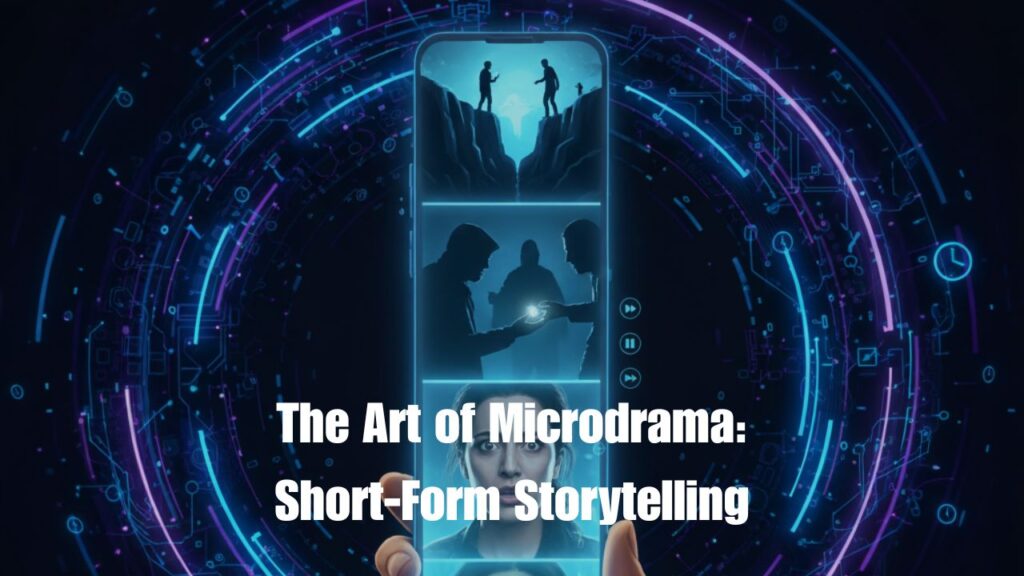
The Art of Microdrama: Short-Form Storytelling

The way the world consumes content has been revolutionized, not by bigger screens, but by faster, smaller stories. At the forefront of this revolution is the Micro-Drama: a hyper-condensed, serialized video format designed specifically for the mobile-first generation. This isn’t just about making videos shorter; it’s about mastering a completely new form of narrative efficiency. 1. Defining the Format: Efficiency is Everything A Micro-Drama is a professionally produced video series characterized by extreme brevity and high emotional impact: Ultra-Short Episodes: Typically 60 to 120 seconds long, fitting perfectly into those fragmented moments of attention during a commute, waiting in line, or scrolling before sleep. Vertical Aesthetic (9:16): Tailored for the smartphone, this vertical orientation creates a feeling of intense intimacy and immediacy, drawing the viewer closer to the characters. Serialized Narrative: Unlike random viral clips, micro-dramas feature continuous storylines, returning characters, and ongoing conflicts, encouraging continuous viewing (micro-bingeing). 2. The Narrative Engine: Why They’re Addictive Micro-dramas succeed by operating on a unique, psychologically addictive formula: The Constant Cliffhanger: The core rule is that every single 90-second segment must end with a shocking reveal, a major twist, or an unresolved conflict. This guarantees the viewer taps “Next Episode,” fueling a rapid cycle of tension and payoff. Prioritizing Plot Velocity: There is no room for lengthy exposition or subtle character development. The story moves at a relentless pace, focusing only on the scenes necessary to drive the central melodrama (often focused on themes like revenge, secret identities, or rapid success). Instant Emotional Hook: The content must validate the viewer’s emotional state or desire in the first three seconds, immediately drawing them into the protagonist’s dilemma. 3. The Global Impact and Market Value The format originated with great commercial success in markets like China and has rapidly become a global category. This popularity is rooted in a highly effective monetization strategy: Low-Friction Revenue: Many dedicated platforms utilize a freemium or micro-payment model. Viewers watch the first few episodes for free, then purchase “coins” or tokens to unlock the rest of the series. This low barrier to entry leads to high impulse purchases and strong revenue growth. High Scalability: Because a full series can be shot in a matter of days for a low relative cost, producers can generate vast libraries of content quickly, matching the audience’s insatiable demand. The Micro-Drama is more than just a trend; it is the ultimate expression of the attention economy, proving that a compelling, unforgettable story can be delivered in just minutes. RedAsh Films: Mastering the Language of Micro-Drama At RedAsh Films, we recognized early that the micro-drama required a specialized skill set: the ability to blend high-quality cinematic production with the hyper-efficient pacing of a vertical, mobile-first format. Our expertise lies in transforming your brand’s narrative or original script into a serialized, addictive micro-drama. We focus on engineering every episode with the precise emotional hook and cliffhanger needed to maximize completion rates and viewer loyalty. If you want to connect with the massive, actively engaged mobile audience, partnering with a team that has already generated millions of views in this space is the critical first step.

The Art of Microdrama: Short-Form Storytelling Read More »

How is micro-drama different from a web or TV show?

For decades, our entertainment consumption was defined by time slots and screens: the one-hour drama on TV or the 30-minute episode on a Web Series. But the rise of the Micro-Drama has introduced a third, disruptive category. While all three formats tell stories, the differences between a micro-drama and its longer cousins are fundamental. They lie not just in length, but in production, monetization, and, most importantly, the psychological contract they forge with the viewer.   1. The Core Difference: Time and Pacing The most obvious distinction is the clock, which forces a completely different narrative rhythm. Feature Micro-Drama Web Series (OTT) TV Show (Daily Soap) Episode Length 60 to 120 seconds (1-2 minutes) 20 to 50 minutes 20 to 45 minutes Total Series Length 60 to 120 minutes (over 50-100 episodes) 4 to 8 hours (over 6-10 episodes) Hundreds of hours (infinite episodes) Pacing Hyper-Paced (A major plot point every 30 seconds) Paced for Binge-Watching (Slow burn plot, character development) Paced for Daily Viewing (Extended conflicts, filler plots) Story Hook Constant Cliffhanger at the end of every clip Cliffhanger at end of the episode/season Cliffhanger at end of the day Export to Sheets A micro-drama must deliver a full emotional arc—setup, conflict, and resolution (or a major twist)—in the time it takes to make coffee. This discipline strips away all exposition and filler, forcing the director to prioritize instant impact. 2. The Contract with the Viewer: Attention and Device Micro-dramas are tailored for a different kind of viewing environment than traditional series. Viewing Environment: TV and Web Series demand “lean-back” time—dedicated, distraction-free viewing, usually in a living room or on a laptop. Micro-dramas are designed for “lean-forward” time, perfectly fitting fragmented moments like commutes, waiting in line, or short breaks. They capitalize on the time users spend doom-scrolling. The Vertical Aesthetic: Unlike the horizontal frame of all traditional media, micro-dramas utilize the 9:16 vertical aspect ratio. This creates an intimate, immediate aesthetic, making the viewer feel closer to the character—like looking through a FaceTime call rather than a cinema screen. 3. Business Model and Production Pipeline The production and financial models for micro-dramas are radically different, allowing for incredible speed and scale. Production Speed: A Web Series requires weeks or months of shooting. A full micro-drama season can be shot in 3-7 days with a leaner crew and simpler locations. This speed allows platforms to rapidly test new genres and scale their libraries. Monetization: While TV relies on bulk advertising and Web Shows on monthly subscriptions, micro-dramas often use a freemium/micro-payment model. Viewers pay tiny, impulsive amounts (coins) to unlock subsequent episodes after being hooked by the first few free ones. This targets a vast mobile audience, especially in Tier 2 and 3 markets like India, where low-friction transactions are more effective than high-commitment subscriptions. Micro-dramas are, therefore, not just short content; they are a sophisticated, mobile-native form of serialized storytelling built on a completely new set of economic and psychological rules. RedAsh Films: Mastering the New Era of Content Understanding the nuances between a Web Series, a TV Show, and a Micro-Drama is essential for any successful content strategy. At RedAsh Films, our integrated production and marketing expertise spans all these formats. We specialize in crafting compelling narratives, whether that means the extended character arcs of a long-form series or the hyper-condensed, addictive storytelling required to create a viral micro-drama. By focusing on the right narrative structure and production efficiency for your chosen platform, we ensure your story doesn’t just entertain, but achieves maximum impact and measurable results in this rapidly evolving digital landscape.   For More Details Email us at – info@redashfilms.com Or Fill The Form On This Link – https://redashfilms.com/contact/

How is micro-drama different from a web or TV show? Read More »

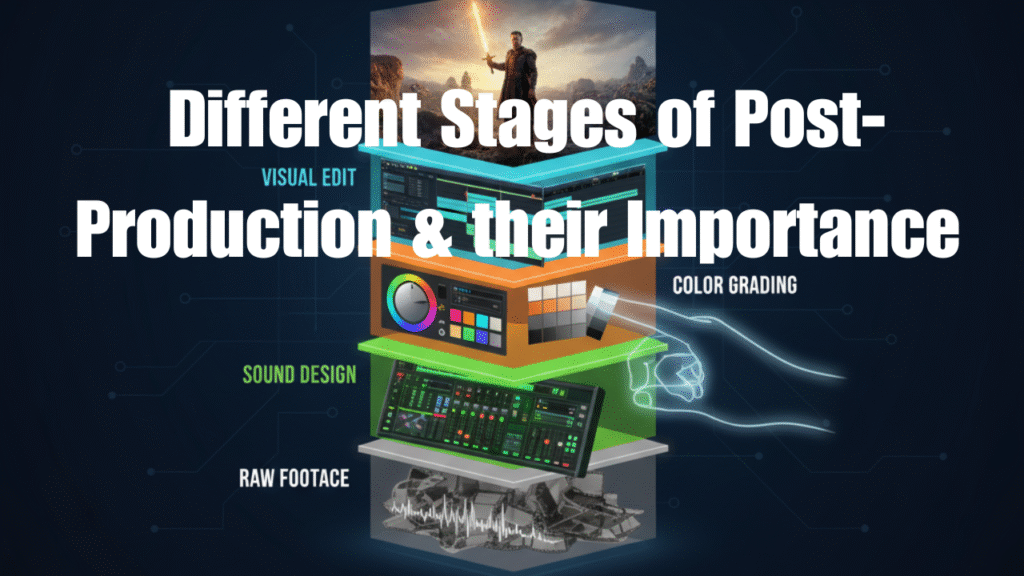
Different Stages of Post- Production & their Importance

In filmmaking and video production, we often celebrate the writer for the script and the director for the vision, but the truth is, the story is truly built in the editing room. Post-production is the crucial final phase where raw footage, disjointed audio clips, and a director’s vision are meticulously crafted into a cohesive, impactful, and polished final product. Often taking longer than the actual shoot, post-production is not just a technical checklist; it is the second directing of the project, profoundly influencing the narrative, mood, and emotional resonance. Here are the essential stages of post-production and why each is indispensable: 1. The Assembly: Logging, Organizing, and the Rough Cut This initial stage turns chaos into order and lays the foundation for storytelling. Logging and Organization: The raw footage (dailies) is reviewed, categorized, and synchronized with audio. Without a meticulous system, hours are wasted searching for the right clip. The Assembly Edit/Rough Cut: The editor selects the best takes and arranges the scenes into their proper narrative sequence according to the script. This first draft is often too long and lacks finesse, but it confirms the core story flow and timing. Importance: This is where the story’s initial pacing and structure are established. It’s the framework that ensures the narrative is coherent before creative elements are added. 2. The Narrative Refinement: Fine Cut and Picture Lock This stage is the editor’s most creative contribution, where raw footage is shaped into an emotional experience. The Fine Cut: The editor works with the director and client to refine every moment. Shots are trimmed to the frame, transitions are perfected, and rhythm is established. The editor manipulates time, speeds up action, or lets a moment linger to heighten emotion. Picture Lock: Once all visual edits are complete and approved by all stakeholders, the “picture is locked.” No further changes to the duration or sequence of the video are permitted. Importance: Picture Lock is critical because it creates a timecode reference for every other department (sound, VFX, graphics). Changing the picture after this point means redoing weeks of work in sound mixing and visual effects. 3. Visual Polish: Color Correction and Grading This is the artistic stage that sets the mood, ensuring visual consistency and emotional impact. Color Correction (Technical): The first step is technical: fixing inconsistencies between shots caused by changing light, multiple cameras, or settings. White balance and exposure are standardized across all footage, ensuring a natural-looking image. Color Grading (Artistic): This is where the mood is set. A skilled colorist adjusts tones to enhance the storytelling. For instance, cool blue tints can evoke isolation or suspense, while warm orange tones suggest nostalgia or comfort. Importance: Color grading is a powerful, non-verbal storytelling tool. It influences the audience’s emotional response and gives the film its signature aesthetic, making it look professional and cinematic. 4. Auditory Immersion: Sound Design and Mixing Often called the “unsung hero,” sound is essential for immersive content. Sound Editing & Design: Dialogue is cleaned up, and separate layers of sound are added: ADR (Additional Dialogue Recording), Foley (recreating everyday sounds like footsteps), and Sound Effects (SFX). Mixing/Mastering: The final stage, where dialogue, music, and effects are balanced to ensure they work harmoniously and meet technical specifications for various distribution platforms (cinema, web, TV). Importance: Quality audio creates a deeper connection and sense of realism. Poor audio breaks the audience’s immersion instantly, regardless of how good the visuals are. Sound guides attention and heightens tension or comedy.   RedAsh Films: Where Post-Production Excellence is Non-Negotiable At RedAsh Films, we view the post-production phase not as cleanup, but as the final, most essential layer of creation. Founded by an IIT Delhi engineer, our process is built on both creative vision and technical precision. We specialize in full-spectrum post-production, ensuring every cut, color grade, and sound effect is meticulously executed to serve your brand’s narrative. We leverage this commitment to quality to produce compelling Ad Films, Corporate AVs, and viral content that achieves measurable results and maintains the highest standards of polish across all platforms.    For More Details Email us at – info@redashfilms.com Or Fill The Form On This Link – https://redashfilms.com/contact/

Different Stages of Post- Production & their Importance Read More »

What is Micro-Drama?

In the fast-paced, scroll-driven world of digital media, attention is the ultimate currency. While long-form series and blockbuster films require a significant time investment, a new entertainment format has risen to dominate the small screen: the Micro-Drama. Simply put, a micro-drama is a short-form, professionally produced, serialized video designed specifically for consumption on mobile devices. They are the espresso shots of storytelling—condensed, intense, and hyper-addictive. Distinguishing Features: More Than Just a Short Video A micro-drama is fundamentally different from a random TikTok clip or a YouTube Short because it adheres to a structured, serialized format. Extreme Brevity: Episodes typically range from 60 to 120 seconds. This ultra-short runtime means they are perfectly consumed during commutes, coffee breaks, or while waiting in line—what industry insiders call “micro-bingeing.” Vertical Format: Most micro-dramas are shot in the 9:16 vertical aspect ratio, making them native to the smartphone screen. This choice isn’t just aesthetic; it creates an intimate, full-screen viewing experience that maximizes engagement. The Constant Cliffhanger: The entire narrative structure is engineered for retention. Every single episode must end on a dramatic high point, a shocking reveal, or a question that demands the viewer tap “Next Episode.” This cycle of tension and partial resolution is the core engine of their addictiveness. High-Intensity Genres: To achieve instant engagement, micro-dramas lean heavily into high-emotion, melodramatic genres: revenge fantasies, secret billionaire romances, workplace intrigues, and dramatic family conflicts. Nuance is sacrificed for plot velocity. The Phenomenal Global and Indian Boom The rise of the micro-drama is a global phenomenon that began in China (duanju) and has rapidly expanded worldwide, but it has found a particularly fertile ground in India: Global Scale: The market outside of China is projected to grow from $1.4 billion in 2024 to an estimated $9.5 billion by 2030. This demonstrates consumers worldwide are ready to pay for this new format. India’s Unique Trajectory: In India, this format is thriving due to mass smartphone penetration and a mobile-first audience base, particularly in Tier 2 and Tier 3 cities. This market is projected to reach $5 billion in the next five years. Platforms dedicated to the format are scaling rapidly, with downloads growing over 100% in Q1 2025 alone. The Monetization Model: Unlike flat-rate streaming subscriptions, micro-dramas often use a freemium or micro-payment system. Viewers get the first few episodes free, then must spend small amounts (often virtual “coins”) to unlock the rest of the series. This low-friction, high-impulse payment method has proven highly effective with the mass mobile audience. Why the Formula Works The success of the micro-drama is rooted in media psychology: Emotional Memory: Stories that evoke strong emotions create stronger, more accessible memories. By packing dramatic tension into every minute, micro-dramas create a memorable experience. Cognitive Ease: In an age of information overload, these dramas offer quick, effortless escapism. They require minimal mental effort, making them the perfect relief during fragmented moments of the day. Production Efficiency: The low cost and rapid production cycle (a full series can be shot in days) allow production houses to quickly test content and scale volume to match the audience’s insatiable demand for novelty. The micro-drama is not a threat to traditional filmmaking; it is a parallel, hyper-efficient new stream of content, proving that a massive impact can be made even when time is measured in minutes, not hours. RedAsh Films: Mastering the Language of Micro-Drama At RedAsh Films, we recognized early that the micro-drama required a specialized skill set: the ability to blend high-quality cinematic production with the hyper-efficient pacing of a vertical, mobile-first format. Our expertise lies in transforming your brand’s narrative or original script into a serialized, addictive micro-drama. We focus on engineering every episode with the precise emotional hook and cliffhanger needed to maximize completion rates and viewer loyalty. If you want to connect with the massive, actively engaged mobile audience, partnering with a team that has already generated millions of views in this space is the critical first step.   For More Details Email us at – info@redashfilms.com Or Fill The Form On This Link – https://redashfilms.com/contact/

What is Micro-Drama? Read More »

How Storytelling Drives Brand Recall in Ad Films

In the crowded landscape of modern advertising, simply shouting about your product or service is no longer enough. Consumers are bombarded with messages, making it harder than ever for brands to stand out and, more importantly, stay memorable. This is where the ancient art of storytelling becomes the most powerful tool in an ad film’s arsenal, transforming fleeting impressions into lasting brand recall. The Science Behind Why Stories Stick Our brains are wired for stories. From cave paintings to campfire tales, narratives have been our primary way of understanding the world, sharing experiences, and remembering information. When we encounter a story, several cognitive processes kick in: Emotional Engagement: Stories evoke feelings – joy, sadness, excitement, empathy. Emotions create stronger memories. An ad film that makes us feel something is far more likely to be remembered than one that just lists features. This emotional connection forms a deeper bond with the brand. Narrative Transportation: When engaged in a story, our minds are “transported” into the narrative world. We become immersed, suspending disbelief, and our critical faculties temporarily diminish. This makes us more receptive to the brand’s message embedded within the story. Meaningful Context: Facts and figures are often quickly forgotten. But when information is woven into a coherent narrative, it gains meaning and context, making it easier to process, retain, and retrieve later. The product becomes a crucial element within the story, not just a standalone object. Relatability & Identification: We see ourselves in stories. When characters face challenges or celebrate triumphs that resonate with our own lives, we identify with them. If a brand helps the character achieve their goal, we subconsciously associate that positive outcome with the brand itself. Beyond the Jingle: Elements of Effective Ad Film Storytelling Simply having a plot isn’t enough; powerful ad film storytelling incorporates specific elements: A Clear Protagonist & Conflict: Whether it’s an individual, a family, or even an animated character, there should be someone the audience can root for. This protagonist faces a challenge or has a desire, creating the core conflict that drives the narrative. The Brand as the Solution (but not the hero): The brand should play a pivotal, yet supporting, role. It’s the catalyst that enables the protagonist to overcome their conflict or achieve their desire. The hero of the story is always the customer or the solution to their problem, enabled by the brand. Emotional Arc & Resolution: The story needs to take the audience on an emotional journey, culminating in a satisfying resolution. This positive feeling then becomes strongly linked to the brand. Authenticity & Relatability: Even fantastical stories need an emotional truth. The underlying themes and human experiences portrayed should feel genuine to the target audience. Memorable Visuals & Sound: A strong narrative is amplified by impactful cinematography, evocative music, and clever sound design, all working in harmony to reinforce the story’s emotional beats and make it unforgettable. The Long-Term ROI of Story-Driven Ads While direct response ads have their place, story-driven ad films build something more valuable: brand equity. They create a positive, memorable association that goes beyond immediate sales, fostering loyalty and advocacy over time. Consider iconic ad films that have transcended mere advertising to become cultural touchstones – they all tell a compelling story. These stories don’t just sell products; they sell values, aspirations, and a connection that makes the brand intrinsically part of the consumer’s world. This deep-seated recall is invaluable, ensuring that when a consumer needs a product or service, your brand is the first one that comes to mind, remembered not for a fleeting slogan, but for a feeling, a moment, a memory. RedAsh Films: Crafting Unforgettable Brand Narratives At RedAsh Films, we understand that an ad film is more than just visuals and dialogue; it’s an opportunity to tell a powerful story. Our expertise lies in transforming your brand’s unique message into compelling narratives that don’t just grab attention, but hold it, fostering genuine emotional connections. We specialize in crafting ad films that leverage the psychology of storytelling to ensure deep brand recall and lasting impact. Whether your brand’s story is epic or intimate, we bring it to life with creativity, precision, and an unwavering focus on making your message unforgettable. For More Details Email us at – info@redashfilms.com Or Fill The Form On This Link – https://redashfilms.com/contact/

How Storytelling Drives Brand Recall in Ad Films Read More »

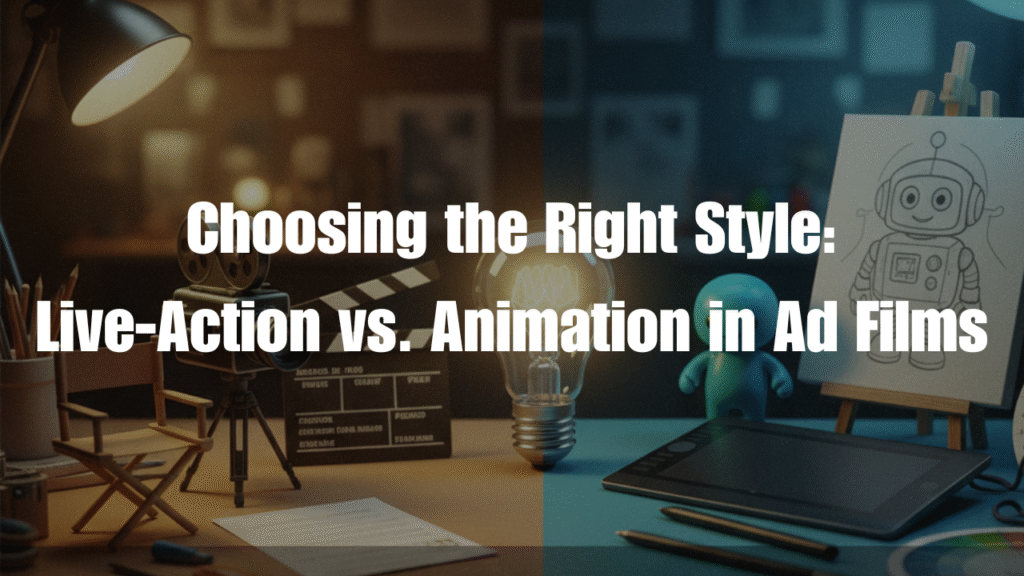
Choosing the Right Style: Live-Action vs. Animation in Ad Films

In the dynamic world of advertising, the goal remains constant: capture attention, convey a message, and drive action. But how that message is delivered is a critical decision. For brands looking to create compelling ad films, one of the foundational choices is between live-action and animation. Both styles offer unique strengths and evoke different responses, and understanding their nuances is key to selecting the perfect medium for your campaign. The Power of Live-Action: Authenticity and Relatability Live-action films, featuring real people, real places, and tangible products, excel at creating an immediate sense of authenticity and connection. Emotional Connection & Relatability: Humans are hardwired to connect with other humans. Seeing real actors experiencing emotions, interacting with products, or navigating relatable scenarios fosters empathy and trust. A smiling family using a product, an athlete achieving a goal, or a real-life testimonial can resonate deeply, making the brand feel more credible and accessible. Tangibility & Product Demonstration: For products that need to be seen in action – a car driving, a new phone feature being used, or food being prepared – live-action is often the most direct and effective choice. It allows consumers to visualize themselves using the product, understanding its scale, texture, and practical benefits. Building Brand Trust: Seeing real people endorse a product or service can significantly enhance a brand’s trustworthiness. Celebrities, influencers, or even everyday individuals lend a human face to your message, which can be particularly powerful for building rapport and establishing authority. However, live-action comes with its own set of challenges, including higher production costs for elaborate sets or famous talent, reliance on weather and location, and potential difficulties in portraying abstract concepts. The Magic of Animation: Creativity Unbound Animation offers unparalleled creative freedom, allowing brands to transcend the limitations of reality and bring even the most abstract ideas to life. Unleashed Creativity: If you can dream it, animation can create it. Want your product to fly, talk, or transform? Need to illustrate complex data in a fun, digestible way? Animation has no boundaries, making it perfect for conveying imaginative concepts, fantastical worlds, or abstract services that are not easily captured by a camera. Simplified Complex Information: Animation excels at simplifying intricate processes or technical details. Explainer videos, often animated, can break down complex ideas into easily understandable visual metaphors, making them ideal for SaaS companies, financial services, or healthcare industries. Consistent Brand Identity: Animation allows for absolute control over visual style, color palettes, and character design, ensuring a perfectly consistent brand identity across all touchpoints. This can be crucial for brands with a strong, distinctive aesthetic. Timeless Appeal & Global Reach: Animated characters and stories often have a more timeless appeal, avoiding issues with aging talent or outdated fashion trends. They can also be easier to localize for global audiences, requiring only dubbing or subtitling rather than reshooting with different actors. Making the Right Choice: Insight and Execution The decision between live-action and animation is rarely black and white. It hinges on several factors: Your Message, Your Brand Identity, Your Target Audience, and Your Budget & Timeline. The most successful campaigns often don’t choose one over the other; they employ a hybrid approach, blending elements of both live-action and animation to maximize impact—using animation for graphical overlays or concept explanation within a live, relatable scenario. RedAsh Films: Mastering Both Sides of the Ad Film Coin Understanding which medium will deliver the highest ROI for your brand requires both creative insight and production expertise. At RedAsh Films, our strength lies in our ability to work across the entire spectrum of ad film production. Whether your goal is the authentic emotional connection of high-end Live-Action or the unbridled clarity and creativity of sophisticated 2D or 3D Animation, we deploy the precise talent and technology needed. We believe the “right style” is the one that achieves your measurable business objectives. By analyzing your target audience and core message, we ensure the final ad film—whether fully animated, live-action, or a hybrid—not only looks stunning but delivers the impact your brand deserves. For More Details Email us at – info@redashfilms.com Or Fill The Form On This Link – https://redashfilms.com/contact/

Choosing the Right Style: Live-Action vs. Animation in Ad Films Read More »

How Micro-Dramas Create Massive Impact in Minutes

In a world where attention spans are measured in seconds—and, according to some studies, are shorter than that of a goldfish—traditional long-form entertainment is fighting a losing battle for the time we spend between tasks. The winner is the Micro-Drama: a hyper-condensed, vertical video series engineered not just to entertain, but to command continuous engagement in the few minutes you have spare. The secret to this format’s explosive, global success lies in its mastery of psychological triggers and its radical reshaping of cinematic language. 1. The Psychology of the Immediate Hook Micro-dramas are specifically designed to address modern cognitive fatigue and the human desire for instant gratification. Defeating the Scroll: With an estimated median human attention span hovering around 47 seconds, content must deliver value instantly. Micro-dramas achieve this by starting in the middle of the conflict (in media res). There are no long establishment shots or slow expositions; the first two seconds contain a visual or dramatic hook—a betrayal, a shocking reveal, or a moment of high tension. The Dopamine Cycle: Each 60-120 second episode is a mini-rollercoaster, climaxing in a dramatic cliffhanger. This constant cycle of tension and partial resolution releases a dopamine hit, creating an “addiction without interruption” that forces the viewer to tap “Next Episode,” turning brief viewing sessions into highly engaged “micro-bingeing.” 2. The Power of Vertical Intimacy The choice of the vertical (9:16) aspect ratio is not an arbitrary trend; it’s a strategic move to maximize emotional connection. A Personal Conversation: The vertical frame, by filling the entire mobile screen without distraction, creates an unprecedented sense of intimacy. It removes the grand distance of the horizontal cinematic frame and pulls the viewer into a tight, direct, one-on-one relationship with the subject. Close-ups and simplified backgrounds magnify every flicker of emotion, making the dramatic stakes feel deeply personal. Optimized for Silence: Given that much mobile content is watched on mute, successful micro-dramas must work visually. The focus on strong, simple gestures, immediate visual action, and concise text overlays ensures the story’s emotional beat is conveyed even without sound. 3. Production: The Efficiency of the Emotional Core The industry has standardized a production model that allows content to be delivered at the speed the audience demands, reducing production time from months to mere days. Fractional Cost, Full Drama: A full micro-drama season can be produced for a cost that is less than 5% of a traditional OTT series. This efficiency, coupled with rapid turnaround (often 7-15 days from script to screen), allows platforms to test genres, scale content, and iterate based on immediate performance data, minimizing risk and maximizing market responsiveness. Melodrama as Momentum: The genre embraces familiar, high-emotion tropes—secret identities, billionaire revenge, hidden pasts. This reliance on archetypal storytelling allows viewers to instantly grasp character motivations and emotional stakes, eliminating the need for lengthy character development and keeping the plot moving at a breakneck pace. RedAsh Films: Mastering High-Impact Storytelling The shift to micro-dramas proves that in modern media, quality is defined by impact, not length. It requires surgical precision and an unyielding commitment to the new vertical grammar. At RedAsh Films, we specialize in transforming traditional narrative techniques into this hyper-efficient, mobile-first format. By fusing cinematic production values with the data-driven need for constant hooks, we create micro-drama series that have generated millions of views for our clients. We understand that in the race for attention, every single second is a precious commodity, and a massive impact must be delivered in minutes. For More Details Email us at – info@redashfilms.com Or Fill The Form On This Link – https://redashfilms.com/contact/

How Micro-Dramas Create Massive Impact in Minutes Read More »

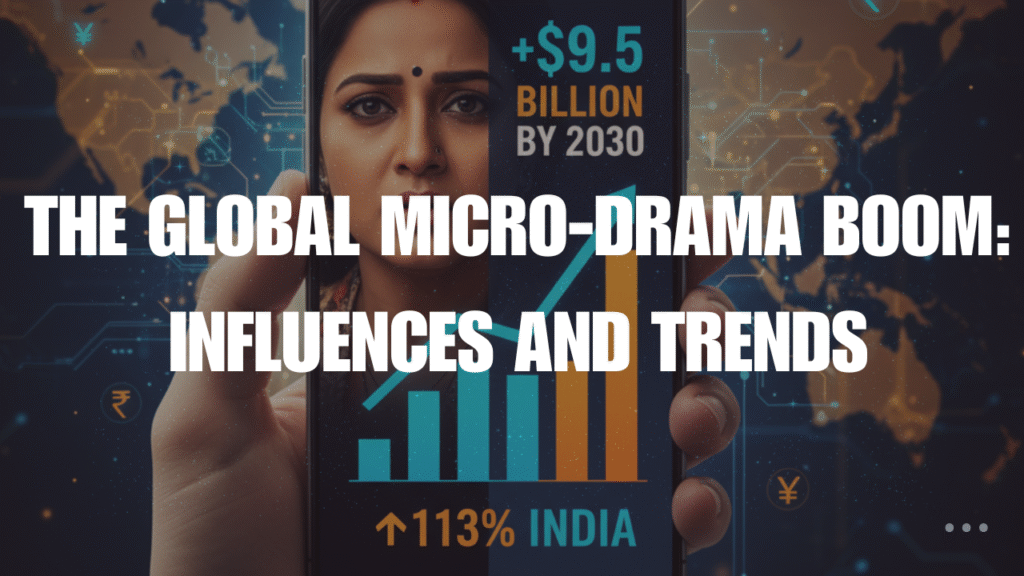
The Global Micro-Drama Boom: Influences and Trends

The short, vertical, addictive Micro-Drama is no longer a fringe format; it is a full-fledged global entertainment category challenging traditional streaming models. Born from the digital zeitgeist, this boom is driven by a universal hunger for instant, high-impact stories, with each major market adapting the formula in fascinating ways. This global surge, projected to grow from $1.4 billion in 2024 to an estimated $9.5 billion by 2030 worldwide, is being influenced by two distinct forces: the proven Chinese blueprint and the unique, high-volume demands of the Indian market. The Global Blueprint The initial commercial and creative success of Chinese micro-dramas provided the global production template: Monetization Innovation: The international market heavily relies on a freemium/micropayment model. Users are given a few free, explosive episodes to hook them, then must spend small amounts (virtual “coins”) to unlock the rest. Globally, subscriptions and in-app purchases are forecast to account for 74% of revenue by 2030. Targeted Niches: Markets like the U.S. are thriving on highly targeted genres like billionaire romance and female revenge fantasy, drawing in affluent, urban women aged 30-60 and projected to reach $3.8 billion by 2030. Hyper-Efficient Production: Micro-dramas maintain profitability by being fast. A full series is often shot in 7-10 days for a fraction of the cost of a traditional OTT show, allowing for rapid iteration and genre testing. India’s Unique Micro-Drama Dynamics India is not merely copying the global trend; it is molding it to fit its massive, highly price-sensitive, and mobile-first audience. Industry reports project India’s micro-drama market to hit $5 Billion in the next five years, driven by several distinguishing factors: 1. The Power of Regional Content and the Bharat Audience In India, the micro-drama is primarily a Tier 2 and Tier 3 phenomenon. Up to 68% of short-video users come from these markets, making the format a true democratizer of entertainment. This audience demands stories in Hindi, Telugu, Tamil, and Bengali, centered on relatable themes of family drama and social conflicts—the same beats that defined TV soap operas, only vertically formatted. 2. Monetization: Scale vs. Revenue While the micropayment model works globally, in India, it faces a challenge: High Acquisition: Platforms are investing heavily, evident in the $44 million in VC funding raised by Indian micro-drama platforms in 2025 (a 55% jump from the previous year). Low ARPU (Average Revenue Per User): India’s price-sensitive audience means ad rates (CPMs) are lower and reliance on pure-play subscriptions is difficult. Platforms like Quick TV and Kuku TV are balancing subscription income with massive scale, aiming to cross the 100 million user mark to make ad-supported and hybrid models truly viable. 3. Production Efficiency: Exponential Cost Reduction The Indian micro-drama model offers production houses unprecedented efficiency. The cost of producing a full micro-drama series can be less than 5% of a regular video OTT series, with entire projects going from script to screen in under a month. This speed allows for content creators to be highly agile, responding to viral trends almost instantly. RedAsh Films: Producing at the Speed of the New Economy The biggest takeaway from this global boom is that speed, localization, and technical mastery of the vertical frame are non-negotiable. At RedAsh Films, we stand at the intersection of this global trend and local execution. We deliver the high-stakes, addictive storytelling the mobile audience craves while maintaining the cost efficiency the platforms demand. Having produced multiple micro-drama shows that have garnered millions of views for our clients, we leverage this model to ensure high-impact narratives that resonate directly with the mass Indian audience. The Micro-Drama is the new global currency of attention, and for those ready to embrace vertical storytelling, the potential for scale and engagement in India is unmatched. For More Details Email us at – info@redashfilms.com Or Fill The Form On This Link – https://redashfilms.com/contact/

The Global Micro-Drama Boom: Influences and Trends Read More »