October 2025

How Storytelling Drives Brand Recall in Ad Films

In the crowded landscape of modern advertising, simply shouting about your product or service is no longer enough. Consumers are bombarded with messages, making it harder than ever for brands to stand out and, more importantly, stay memorable. This is where the ancient art of storytelling becomes the most powerful tool in an ad film’s arsenal, transforming fleeting impressions into lasting brand recall. The Science Behind Why Stories Stick Our brains are wired for stories. From cave paintings to campfire tales, narratives have been our primary way of understanding the world, sharing experiences, and remembering information. When we encounter a story, several cognitive processes kick in: Emotional Engagement: Stories evoke feelings – joy, sadness, excitement, empathy. Emotions create stronger memories. An ad film that makes us feel something is far more likely to be remembered than one that just lists features. This emotional connection forms a deeper bond with the brand. Narrative Transportation: When engaged in a story, our minds are “transported” into the narrative world. We become immersed, suspending disbelief, and our critical faculties temporarily diminish. This makes us more receptive to the brand’s message embedded within the story. Meaningful Context: Facts and figures are often quickly forgotten. But when information is woven into a coherent narrative, it gains meaning and context, making it easier to process, retain, and retrieve later. The product becomes a crucial element within the story, not just a standalone object. Relatability & Identification: We see ourselves in stories. When characters face challenges or celebrate triumphs that resonate with our own lives, we identify with them. If a brand helps the character achieve their goal, we subconsciously associate that positive outcome with the brand itself. Beyond the Jingle: Elements of Effective Ad Film Storytelling Simply having a plot isn’t enough; powerful ad film storytelling incorporates specific elements: A Clear Protagonist & Conflict: Whether it’s an individual, a family, or even an animated character, there should be someone the audience can root for. This protagonist faces a challenge or has a desire, creating the core conflict that drives the narrative. The Brand as the Solution (but not the hero): The brand should play a pivotal, yet supporting, role. It’s the catalyst that enables the protagonist to overcome their conflict or achieve their desire. The hero of the story is always the customer or the solution to their problem, enabled by the brand. Emotional Arc & Resolution: The story needs to take the audience on an emotional journey, culminating in a satisfying resolution. This positive feeling then becomes strongly linked to the brand. Authenticity & Relatability: Even fantastical stories need an emotional truth. The underlying themes and human experiences portrayed should feel genuine to the target audience. Memorable Visuals & Sound: A strong narrative is amplified by impactful cinematography, evocative music, and clever sound design, all working in harmony to reinforce the story’s emotional beats and make it unforgettable. The Long-Term ROI of Story-Driven Ads While direct response ads have their place, story-driven ad films build something more valuable: brand equity. They create a positive, memorable association that goes beyond immediate sales, fostering loyalty and advocacy over time. Consider iconic ad films that have transcended mere advertising to become cultural touchstones – they all tell a compelling story. These stories don’t just sell products; they sell values, aspirations, and a connection that makes the brand intrinsically part of the consumer’s world. This deep-seated recall is invaluable, ensuring that when a consumer needs a product or service, your brand is the first one that comes to mind, remembered not for a fleeting slogan, but for a feeling, a moment, a memory. RedAsh Films: Crafting Unforgettable Brand Narratives At RedAsh Films, we understand that an ad film is more than just visuals and dialogue; it’s an opportunity to tell a powerful story. Our expertise lies in transforming your brand’s unique message into compelling narratives that don’t just grab attention, but hold it, fostering genuine emotional connections. We specialize in crafting ad films that leverage the psychology of storytelling to ensure deep brand recall and lasting impact. Whether your brand’s story is epic or intimate, we bring it to life with creativity, precision, and an unwavering focus on making your message unforgettable. For More Details Email us at – info@redashfilms.com Or Fill The Form On This Link – https://redashfilms.com/contact/

How Storytelling Drives Brand Recall in Ad Films Read More »
Choosing the Right Style: Live-Action vs. Animation in Ad Films

In the dynamic world of advertising, the goal remains constant: capture attention, convey a message, and drive action. But how that message is delivered is a critical decision. For brands looking to create compelling ad films, one of the foundational choices is between live-action and animation. Both styles offer unique strengths and evoke different responses, and understanding their nuances is key to selecting the perfect medium for your campaign. The Power of Live-Action: Authenticity and Relatability Live-action films, featuring real people, real places, and tangible products, excel at creating an immediate sense of authenticity and connection. Emotional Connection & Relatability: Humans are hardwired to connect with other humans. Seeing real actors experiencing emotions, interacting with products, or navigating relatable scenarios fosters empathy and trust. A smiling family using a product, an athlete achieving a goal, or a real-life testimonial can resonate deeply, making the brand feel more credible and accessible. Tangibility & Product Demonstration: For products that need to be seen in action – a car driving, a new phone feature being used, or food being prepared – live-action is often the most direct and effective choice. It allows consumers to visualize themselves using the product, understanding its scale, texture, and practical benefits. Building Brand Trust: Seeing real people endorse a product or service can significantly enhance a brand’s trustworthiness. Celebrities, influencers, or even everyday individuals lend a human face to your message, which can be particularly powerful for building rapport and establishing authority. However, live-action comes with its own set of challenges, including higher production costs for elaborate sets or famous talent, reliance on weather and location, and potential difficulties in portraying abstract concepts. The Magic of Animation: Creativity Unbound Animation offers unparalleled creative freedom, allowing brands to transcend the limitations of reality and bring even the most abstract ideas to life. Unleashed Creativity: If you can dream it, animation can create it. Want your product to fly, talk, or transform? Need to illustrate complex data in a fun, digestible way? Animation has no boundaries, making it perfect for conveying imaginative concepts, fantastical worlds, or abstract services that are not easily captured by a camera. Simplified Complex Information: Animation excels at simplifying intricate processes or technical details. Explainer videos, often animated, can break down complex ideas into easily understandable visual metaphors, making them ideal for SaaS companies, financial services, or healthcare industries. Consistent Brand Identity: Animation allows for absolute control over visual style, color palettes, and character design, ensuring a perfectly consistent brand identity across all touchpoints. This can be crucial for brands with a strong, distinctive aesthetic. Timeless Appeal & Global Reach: Animated characters and stories often have a more timeless appeal, avoiding issues with aging talent or outdated fashion trends. They can also be easier to localize for global audiences, requiring only dubbing or subtitling rather than reshooting with different actors. Making the Right Choice: Insight and Execution The decision between live-action and animation is rarely black and white. It hinges on several factors: Your Message, Your Brand Identity, Your Target Audience, and Your Budget & Timeline. The most successful campaigns often don’t choose one over the other; they employ a hybrid approach, blending elements of both live-action and animation to maximize impact—using animation for graphical overlays or concept explanation within a live, relatable scenario. RedAsh Films: Mastering Both Sides of the Ad Film Coin Understanding which medium will deliver the highest ROI for your brand requires both creative insight and production expertise. At RedAsh Films, our strength lies in our ability to work across the entire spectrum of ad film production. Whether your goal is the authentic emotional connection of high-end Live-Action or the unbridled clarity and creativity of sophisticated 2D or 3D Animation, we deploy the precise talent and technology needed. We believe the “right style” is the one that achieves your measurable business objectives. By analyzing your target audience and core message, we ensure the final ad film—whether fully animated, live-action, or a hybrid—not only looks stunning but delivers the impact your brand deserves. For More Details Email us at – info@redashfilms.com Or Fill The Form On This Link – https://redashfilms.com/contact/

Choosing the Right Style: Live-Action vs. Animation in Ad Films Read More »

How Micro-Dramas Create Massive Impact in Minutes

In a world where attention spans are measured in seconds—and, according to some studies, are shorter than that of a goldfish—traditional long-form entertainment is fighting a losing battle for the time we spend between tasks. The winner is the Micro-Drama: a hyper-condensed, vertical video series engineered not just to entertain, but to command continuous engagement in the few minutes you have spare. The secret to this format’s explosive, global success lies in its mastery of psychological triggers and its radical reshaping of cinematic language. 1. The Psychology of the Immediate Hook Micro-dramas are specifically designed to address modern cognitive fatigue and the human desire for instant gratification. Defeating the Scroll: With an estimated median human attention span hovering around 47 seconds, content must deliver value instantly. Micro-dramas achieve this by starting in the middle of the conflict (in media res). There are no long establishment shots or slow expositions; the first two seconds contain a visual or dramatic hook—a betrayal, a shocking reveal, or a moment of high tension. The Dopamine Cycle: Each 60-120 second episode is a mini-rollercoaster, climaxing in a dramatic cliffhanger. This constant cycle of tension and partial resolution releases a dopamine hit, creating an “addiction without interruption” that forces the viewer to tap “Next Episode,” turning brief viewing sessions into highly engaged “micro-bingeing.” 2. The Power of Vertical Intimacy The choice of the vertical (9:16) aspect ratio is not an arbitrary trend; it’s a strategic move to maximize emotional connection. A Personal Conversation: The vertical frame, by filling the entire mobile screen without distraction, creates an unprecedented sense of intimacy. It removes the grand distance of the horizontal cinematic frame and pulls the viewer into a tight, direct, one-on-one relationship with the subject. Close-ups and simplified backgrounds magnify every flicker of emotion, making the dramatic stakes feel deeply personal. Optimized for Silence: Given that much mobile content is watched on mute, successful micro-dramas must work visually. The focus on strong, simple gestures, immediate visual action, and concise text overlays ensures the story’s emotional beat is conveyed even without sound. 3. Production: The Efficiency of the Emotional Core The industry has standardized a production model that allows content to be delivered at the speed the audience demands, reducing production time from months to mere days. Fractional Cost, Full Drama: A full micro-drama season can be produced for a cost that is less than 5% of a traditional OTT series. This efficiency, coupled with rapid turnaround (often 7-15 days from script to screen), allows platforms to test genres, scale content, and iterate based on immediate performance data, minimizing risk and maximizing market responsiveness. Melodrama as Momentum: The genre embraces familiar, high-emotion tropes—secret identities, billionaire revenge, hidden pasts. This reliance on archetypal storytelling allows viewers to instantly grasp character motivations and emotional stakes, eliminating the need for lengthy character development and keeping the plot moving at a breakneck pace. RedAsh Films: Mastering High-Impact Storytelling The shift to micro-dramas proves that in modern media, quality is defined by impact, not length. It requires surgical precision and an unyielding commitment to the new vertical grammar. At RedAsh Films, we specialize in transforming traditional narrative techniques into this hyper-efficient, mobile-first format. By fusing cinematic production values with the data-driven need for constant hooks, we create micro-drama series that have generated millions of views for our clients. We understand that in the race for attention, every single second is a precious commodity, and a massive impact must be delivered in minutes. For More Details Email us at – info@redashfilms.com Or Fill The Form On This Link – https://redashfilms.com/contact/

How Micro-Dramas Create Massive Impact in Minutes Read More »

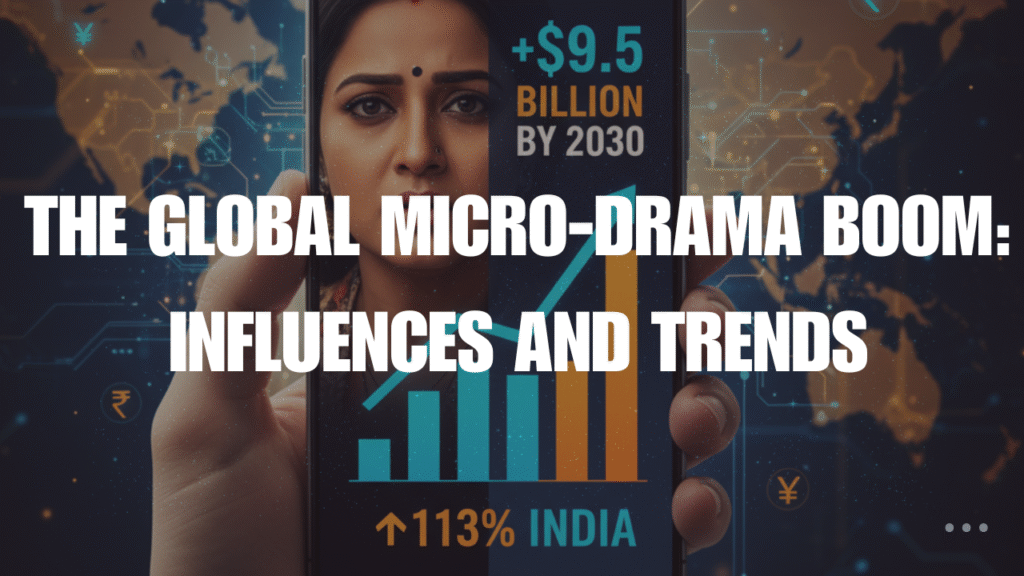
The Global Micro-Drama Boom: Influences and Trends

The short, vertical, addictive Micro-Drama is no longer a fringe format; it is a full-fledged global entertainment category challenging traditional streaming models. Born from the digital zeitgeist, this boom is driven by a universal hunger for instant, high-impact stories, with each major market adapting the formula in fascinating ways. This global surge, projected to grow from $1.4 billion in 2024 to an estimated $9.5 billion by 2030 worldwide, is being influenced by two distinct forces: the proven Chinese blueprint and the unique, high-volume demands of the Indian market. The Global Blueprint The initial commercial and creative success of Chinese micro-dramas provided the global production template: Monetization Innovation: The international market heavily relies on a freemium/micropayment model. Users are given a few free, explosive episodes to hook them, then must spend small amounts (virtual “coins”) to unlock the rest. Globally, subscriptions and in-app purchases are forecast to account for 74% of revenue by 2030. Targeted Niches: Markets like the U.S. are thriving on highly targeted genres like billionaire romance and female revenge fantasy, drawing in affluent, urban women aged 30-60 and projected to reach $3.8 billion by 2030. Hyper-Efficient Production: Micro-dramas maintain profitability by being fast. A full series is often shot in 7-10 days for a fraction of the cost of a traditional OTT show, allowing for rapid iteration and genre testing. India’s Unique Micro-Drama Dynamics India is not merely copying the global trend; it is molding it to fit its massive, highly price-sensitive, and mobile-first audience. Industry reports project India’s micro-drama market to hit $5 Billion in the next five years, driven by several distinguishing factors: 1. The Power of Regional Content and the Bharat Audience In India, the micro-drama is primarily a Tier 2 and Tier 3 phenomenon. Up to 68% of short-video users come from these markets, making the format a true democratizer of entertainment. This audience demands stories in Hindi, Telugu, Tamil, and Bengali, centered on relatable themes of family drama and social conflicts—the same beats that defined TV soap operas, only vertically formatted. 2. Monetization: Scale vs. Revenue While the micropayment model works globally, in India, it faces a challenge: High Acquisition: Platforms are investing heavily, evident in the $44 million in VC funding raised by Indian micro-drama platforms in 2025 (a 55% jump from the previous year). Low ARPU (Average Revenue Per User): India’s price-sensitive audience means ad rates (CPMs) are lower and reliance on pure-play subscriptions is difficult. Platforms like Quick TV and Kuku TV are balancing subscription income with massive scale, aiming to cross the 100 million user mark to make ad-supported and hybrid models truly viable. 3. Production Efficiency: Exponential Cost Reduction The Indian micro-drama model offers production houses unprecedented efficiency. The cost of producing a full micro-drama series can be less than 5% of a regular video OTT series, with entire projects going from script to screen in under a month. This speed allows for content creators to be highly agile, responding to viral trends almost instantly. RedAsh Films: Producing at the Speed of the New Economy The biggest takeaway from this global boom is that speed, localization, and technical mastery of the vertical frame are non-negotiable. At RedAsh Films, we stand at the intersection of this global trend and local execution. We deliver the high-stakes, addictive storytelling the mobile audience craves while maintaining the cost efficiency the platforms demand. Having produced multiple micro-drama shows that have garnered millions of views for our clients, we leverage this model to ensure high-impact narratives that resonate directly with the mass Indian audience. The Micro-Drama is the new global currency of attention, and for those ready to embrace vertical storytelling, the potential for scale and engagement in India is unmatched. For More Details Email us at – info@redashfilms.com Or Fill The Form On This Link – https://redashfilms.com/contact/

The Global Micro-Drama Boom: Influences and Trends Read More »

The Rise of Micro-Dramas in India’s Media Industry

The way India consumes stories has fundamentally changed. It is no longer entertainment restricted to the 8 PM TV slot or the multiplex. It now lives in our palms, delivered in vertical frames, and consumed in explosive, bite-sized bursts of 60 to 120 seconds. This is the era of Micro-Drama, and it is rapidly emerging from an experimental format into a multi-billion dollar industry that is redefining the economics of digital content. The Stats That Prove the Boom is Real The rise of the micro-drama is not a fleeting trend; it’s a data-driven phenomenon fueled by India’s unique digital consumption habits: Massive Market Potential: India’s micro-drama industry is projected to reach US $5 Billion in the next five years, according to industry reports. This growth trajectory is mirroring the explosive success seen in markets like China, where the format is already valued in the billions. Hyper-Growth in Downloads: The adoption rate is staggering. In Q1 2025 alone, micro-drama app downloads in India grew by an astonishing 113%, indicating a massive, immediate shift in consumer preference. The Mobile-Only Audience: With over 96% of Indians accessing the internet via mobile phones (Meta-Ipsos Report), the vertical 9:16 frame is the new standard. Content that isn’t mobile-native is simply being ignored. Binge-Watching on the Go: Dedicated micro-drama platforms are reporting over 120 million micro-drama episodes watched daily, proving the format’s extreme addictive potential and high-frequency engagement. The Bharat Factor: This trend is driven by audiences outside metros. Platforms estimate that up to 68% of micro-drama viewers hail from Tier 2 and Tier 3 cities like Kanpur, Patna, and Jaipur, where the mobile phone is the primary screen for entertainment. The Recipe for Addiction: How Micro-Dramas Win Micro-dramas succeed by perfecting a formula built for short attention spans and instant gratification: High-Intensity Pacing: The content starts in media res (in the middle of the action). There is no setup, no slow burn—just an immediate, high-stakes hook. The “Coin-Toss” Model: Many specialized platforms leverage a micropayment or freemium model. Users get the first few episodes free, but once they are hooked by a major cliffhanger, they pay a small fee to unlock the rest of the series. This low-ticket transaction is highly effective with the mass market. Efficiency in Production: Compared to a traditional OTT series which takes 30-60 days to shoot, an entire micro-drama season can be shot in as little as 3-4 days. This allows platforms to be incredibly responsive, rolling out trendy, localized content at an unprecedented speed. The Producer’s Edge: Crafting Success in the Vertical World This shift has created an immense demand for production houses that understand this new, vertically-oriented language of storytelling. It requires a unique blend of cinematic quality, lean production, and a deep understanding of mobile audience psychology. The market is no longer interested in low-effort vertical videos; it demands sophisticated, serialized content that delivers an emotional punch in under two minutes. This is where expertise separates the content from the clutter. RedAsh Films: Mastering the Micro-Drama Landscape At RedAsh Films, we recognized this inflection point early. Our mission has been to bridge the gap between high-quality production and the rapid-fire demands of the vertical format. We are proud to have partnered with leading platforms in this space, creating a portfolio of micro-drama shows that have generated millions of views and achieved exceptional completion rates for our clients. The vertical future is here, and it requires a production partner with the creative agility and technical skill to deliver high-impact, addictive stories, one minute at a time. For More Details Email us at – info@redashfilms.com Or Fill The Form On This Link – https://redashfilms.com/contact/

The Rise of Micro-Dramas in India’s Media Industry Read More »