November 2025

The Art of Microdrama: Short-Form Storytelling

The way the world consumes content has been revolutionized, not by bigger screens, but by faster, smaller stories. At the forefront of this revolution is the Micro-Drama: a hyper-condensed, serialized video format designed specifically for the mobile-first generation. This isn’t just about making videos shorter; it’s about mastering a completely new form of narrative efficiency. 1. Defining the Format: Efficiency is Everything A Micro-Drama is a professionally produced video series characterized by extreme brevity and high emotional impact: Ultra-Short Episodes: Typically 60 to 120 seconds long, fitting perfectly into those fragmented moments of attention during a commute, waiting in line, or scrolling before sleep. Vertical Aesthetic (9:16): Tailored for the smartphone, this vertical orientation creates a feeling of intense intimacy and immediacy, drawing the viewer closer to the characters. Serialized Narrative: Unlike random viral clips, micro-dramas feature continuous storylines, returning characters, and ongoing conflicts, encouraging continuous viewing (micro-bingeing). 2. The Narrative Engine: Why They’re Addictive Micro-dramas succeed by operating on a unique, psychologically addictive formula: The Constant Cliffhanger: The core rule is that every single 90-second segment must end with a shocking reveal, a major twist, or an unresolved conflict. This guarantees the viewer taps “Next Episode,” fueling a rapid cycle of tension and payoff. Prioritizing Plot Velocity: There is no room for lengthy exposition or subtle character development. The story moves at a relentless pace, focusing only on the scenes necessary to drive the central melodrama (often focused on themes like revenge, secret identities, or rapid success). Instant Emotional Hook: The content must validate the viewer’s emotional state or desire in the first three seconds, immediately drawing them into the protagonist’s dilemma. 3. The Global Impact and Market Value The format originated with great commercial success in markets like China and has rapidly become a global category. This popularity is rooted in a highly effective monetization strategy: Low-Friction Revenue: Many dedicated platforms utilize a freemium or micro-payment model. Viewers watch the first few episodes for free, then purchase “coins” or tokens to unlock the rest of the series. This low barrier to entry leads to high impulse purchases and strong revenue growth. High Scalability: Because a full series can be shot in a matter of days for a low relative cost, producers can generate vast libraries of content quickly, matching the audience’s insatiable demand. The Micro-Drama is more than just a trend; it is the ultimate expression of the attention economy, proving that a compelling, unforgettable story can be delivered in just minutes. RedAsh Films: Mastering the Language of Micro-Drama At RedAsh Films, we recognized early that the micro-drama required a specialized skill set: the ability to blend high-quality cinematic production with the hyper-efficient pacing of a vertical, mobile-first format. Our expertise lies in transforming your brand’s narrative or original script into a serialized, addictive micro-drama. We focus on engineering every episode with the precise emotional hook and cliffhanger needed to maximize completion rates and viewer loyalty. If you want to connect with the massive, actively engaged mobile audience, partnering with a team that has already generated millions of views in this space is the critical first step.

The Art of Microdrama: Short-Form Storytelling Read More »

How is micro-drama different from a web or TV show?

For decades, our entertainment consumption was defined by time slots and screens: the one-hour drama on TV or the 30-minute episode on a Web Series. But the rise of the Micro-Drama has introduced a third, disruptive category. While all three formats tell stories, the differences between a micro-drama and its longer cousins are fundamental. They lie not just in length, but in production, monetization, and, most importantly, the psychological contract they forge with the viewer.   1. The Core Difference: Time and Pacing The most obvious distinction is the clock, which forces a completely different narrative rhythm. Feature Micro-Drama Web Series (OTT) TV Show (Daily Soap) Episode Length 60 to 120 seconds (1-2 minutes) 20 to 50 minutes 20 to 45 minutes Total Series Length 60 to 120 minutes (over 50-100 episodes) 4 to 8 hours (over 6-10 episodes) Hundreds of hours (infinite episodes) Pacing Hyper-Paced (A major plot point every 30 seconds) Paced for Binge-Watching (Slow burn plot, character development) Paced for Daily Viewing (Extended conflicts, filler plots) Story Hook Constant Cliffhanger at the end of every clip Cliffhanger at end of the episode/season Cliffhanger at end of the day Export to Sheets A micro-drama must deliver a full emotional arc—setup, conflict, and resolution (or a major twist)—in the time it takes to make coffee. This discipline strips away all exposition and filler, forcing the director to prioritize instant impact. 2. The Contract with the Viewer: Attention and Device Micro-dramas are tailored for a different kind of viewing environment than traditional series. Viewing Environment: TV and Web Series demand “lean-back” time—dedicated, distraction-free viewing, usually in a living room or on a laptop. Micro-dramas are designed for “lean-forward” time, perfectly fitting fragmented moments like commutes, waiting in line, or short breaks. They capitalize on the time users spend doom-scrolling. The Vertical Aesthetic: Unlike the horizontal frame of all traditional media, micro-dramas utilize the 9:16 vertical aspect ratio. This creates an intimate, immediate aesthetic, making the viewer feel closer to the character—like looking through a FaceTime call rather than a cinema screen. 3. Business Model and Production Pipeline The production and financial models for micro-dramas are radically different, allowing for incredible speed and scale. Production Speed: A Web Series requires weeks or months of shooting. A full micro-drama season can be shot in 3-7 days with a leaner crew and simpler locations. This speed allows platforms to rapidly test new genres and scale their libraries. Monetization: While TV relies on bulk advertising and Web Shows on monthly subscriptions, micro-dramas often use a freemium/micro-payment model. Viewers pay tiny, impulsive amounts (coins) to unlock subsequent episodes after being hooked by the first few free ones. This targets a vast mobile audience, especially in Tier 2 and 3 markets like India, where low-friction transactions are more effective than high-commitment subscriptions. Micro-dramas are, therefore, not just short content; they are a sophisticated, mobile-native form of serialized storytelling built on a completely new set of economic and psychological rules. RedAsh Films: Mastering the New Era of Content Understanding the nuances between a Web Series, a TV Show, and a Micro-Drama is essential for any successful content strategy. At RedAsh Films, our integrated production and marketing expertise spans all these formats. We specialize in crafting compelling narratives, whether that means the extended character arcs of a long-form series or the hyper-condensed, addictive storytelling required to create a viral micro-drama. By focusing on the right narrative structure and production efficiency for your chosen platform, we ensure your story doesn’t just entertain, but achieves maximum impact and measurable results in this rapidly evolving digital landscape.   For More Details Email us at – info@redashfilms.com Or Fill The Form On This Link – https://redashfilms.com/contact/

How is micro-drama different from a web or TV show? Read More »

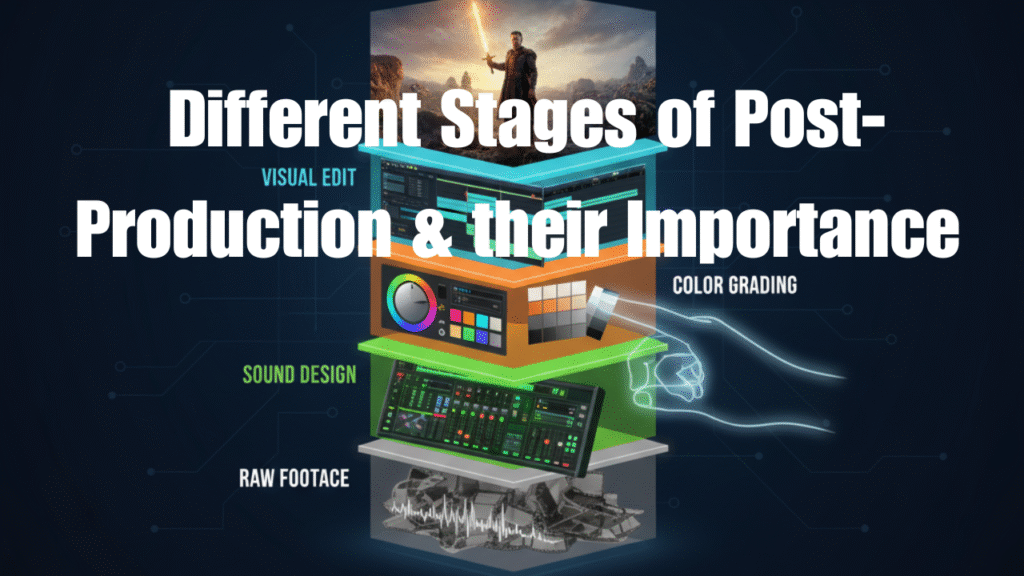
Different Stages of Post- Production & their Importance

In filmmaking and video production, we often celebrate the writer for the script and the director for the vision, but the truth is, the story is truly built in the editing room. Post-production is the crucial final phase where raw footage, disjointed audio clips, and a director’s vision are meticulously crafted into a cohesive, impactful, and polished final product. Often taking longer than the actual shoot, post-production is not just a technical checklist; it is the second directing of the project, profoundly influencing the narrative, mood, and emotional resonance. Here are the essential stages of post-production and why each is indispensable: 1. The Assembly: Logging, Organizing, and the Rough Cut This initial stage turns chaos into order and lays the foundation for storytelling. Logging and Organization: The raw footage (dailies) is reviewed, categorized, and synchronized with audio. Without a meticulous system, hours are wasted searching for the right clip. The Assembly Edit/Rough Cut: The editor selects the best takes and arranges the scenes into their proper narrative sequence according to the script. This first draft is often too long and lacks finesse, but it confirms the core story flow and timing. Importance: This is where the story’s initial pacing and structure are established. It’s the framework that ensures the narrative is coherent before creative elements are added. 2. The Narrative Refinement: Fine Cut and Picture Lock This stage is the editor’s most creative contribution, where raw footage is shaped into an emotional experience. The Fine Cut: The editor works with the director and client to refine every moment. Shots are trimmed to the frame, transitions are perfected, and rhythm is established. The editor manipulates time, speeds up action, or lets a moment linger to heighten emotion. Picture Lock: Once all visual edits are complete and approved by all stakeholders, the “picture is locked.” No further changes to the duration or sequence of the video are permitted. Importance: Picture Lock is critical because it creates a timecode reference for every other department (sound, VFX, graphics). Changing the picture after this point means redoing weeks of work in sound mixing and visual effects. 3. Visual Polish: Color Correction and Grading This is the artistic stage that sets the mood, ensuring visual consistency and emotional impact. Color Correction (Technical): The first step is technical: fixing inconsistencies between shots caused by changing light, multiple cameras, or settings. White balance and exposure are standardized across all footage, ensuring a natural-looking image. Color Grading (Artistic): This is where the mood is set. A skilled colorist adjusts tones to enhance the storytelling. For instance, cool blue tints can evoke isolation or suspense, while warm orange tones suggest nostalgia or comfort. Importance: Color grading is a powerful, non-verbal storytelling tool. It influences the audience’s emotional response and gives the film its signature aesthetic, making it look professional and cinematic. 4. Auditory Immersion: Sound Design and Mixing Often called the “unsung hero,” sound is essential for immersive content. Sound Editing & Design: Dialogue is cleaned up, and separate layers of sound are added: ADR (Additional Dialogue Recording), Foley (recreating everyday sounds like footsteps), and Sound Effects (SFX). Mixing/Mastering: The final stage, where dialogue, music, and effects are balanced to ensure they work harmoniously and meet technical specifications for various distribution platforms (cinema, web, TV). Importance: Quality audio creates a deeper connection and sense of realism. Poor audio breaks the audience’s immersion instantly, regardless of how good the visuals are. Sound guides attention and heightens tension or comedy.   RedAsh Films: Where Post-Production Excellence is Non-Negotiable At RedAsh Films, we view the post-production phase not as cleanup, but as the final, most essential layer of creation. Founded by an IIT Delhi engineer, our process is built on both creative vision and technical precision. We specialize in full-spectrum post-production, ensuring every cut, color grade, and sound effect is meticulously executed to serve your brand’s narrative. We leverage this commitment to quality to produce compelling Ad Films, Corporate AVs, and viral content that achieves measurable results and maintains the highest standards of polish across all platforms.    For More Details Email us at – info@redashfilms.com Or Fill The Form On This Link – https://redashfilms.com/contact/

Different Stages of Post- Production & their Importance Read More »

What is Micro-Drama?

In the fast-paced, scroll-driven world of digital media, attention is the ultimate currency. While long-form series and blockbuster films require a significant time investment, a new entertainment format has risen to dominate the small screen: the Micro-Drama. Simply put, a micro-drama is a short-form, professionally produced, serialized video designed specifically for consumption on mobile devices. They are the espresso shots of storytelling—condensed, intense, and hyper-addictive. Distinguishing Features: More Than Just a Short Video A micro-drama is fundamentally different from a random TikTok clip or a YouTube Short because it adheres to a structured, serialized format. Extreme Brevity: Episodes typically range from 60 to 120 seconds. This ultra-short runtime means they are perfectly consumed during commutes, coffee breaks, or while waiting in line—what industry insiders call “micro-bingeing.” Vertical Format: Most micro-dramas are shot in the 9:16 vertical aspect ratio, making them native to the smartphone screen. This choice isn’t just aesthetic; it creates an intimate, full-screen viewing experience that maximizes engagement. The Constant Cliffhanger: The entire narrative structure is engineered for retention. Every single episode must end on a dramatic high point, a shocking reveal, or a question that demands the viewer tap “Next Episode.” This cycle of tension and partial resolution is the core engine of their addictiveness. High-Intensity Genres: To achieve instant engagement, micro-dramas lean heavily into high-emotion, melodramatic genres: revenge fantasies, secret billionaire romances, workplace intrigues, and dramatic family conflicts. Nuance is sacrificed for plot velocity. The Phenomenal Global and Indian Boom The rise of the micro-drama is a global phenomenon that began in China (duanju) and has rapidly expanded worldwide, but it has found a particularly fertile ground in India: Global Scale: The market outside of China is projected to grow from $1.4 billion in 2024 to an estimated $9.5 billion by 2030. This demonstrates consumers worldwide are ready to pay for this new format. India’s Unique Trajectory: In India, this format is thriving due to mass smartphone penetration and a mobile-first audience base, particularly in Tier 2 and Tier 3 cities. This market is projected to reach $5 billion in the next five years. Platforms dedicated to the format are scaling rapidly, with downloads growing over 100% in Q1 2025 alone. The Monetization Model: Unlike flat-rate streaming subscriptions, micro-dramas often use a freemium or micro-payment system. Viewers get the first few episodes free, then must spend small amounts (often virtual “coins”) to unlock the rest of the series. This low-friction, high-impulse payment method has proven highly effective with the mass mobile audience. Why the Formula Works The success of the micro-drama is rooted in media psychology: Emotional Memory: Stories that evoke strong emotions create stronger, more accessible memories. By packing dramatic tension into every minute, micro-dramas create a memorable experience. Cognitive Ease: In an age of information overload, these dramas offer quick, effortless escapism. They require minimal mental effort, making them the perfect relief during fragmented moments of the day. Production Efficiency: The low cost and rapid production cycle (a full series can be shot in days) allow production houses to quickly test content and scale volume to match the audience’s insatiable demand for novelty. The micro-drama is not a threat to traditional filmmaking; it is a parallel, hyper-efficient new stream of content, proving that a massive impact can be made even when time is measured in minutes, not hours. RedAsh Films: Mastering the Language of Micro-Drama At RedAsh Films, we recognized early that the micro-drama required a specialized skill set: the ability to blend high-quality cinematic production with the hyper-efficient pacing of a vertical, mobile-first format. Our expertise lies in transforming your brand’s narrative or original script into a serialized, addictive micro-drama. We focus on engineering every episode with the precise emotional hook and cliffhanger needed to maximize completion rates and viewer loyalty. If you want to connect with the massive, actively engaged mobile audience, partnering with a team that has already generated millions of views in this space is the critical first step.   For More Details Email us at – info@redashfilms.com Or Fill The Form On This Link – https://redashfilms.com/contact/

What is Micro-Drama? Read More »